


Why Are 4-Ton Trucks the Mainstream Choice in Tanzania?
Payload, Road Conditions, and Operating Cost Balance
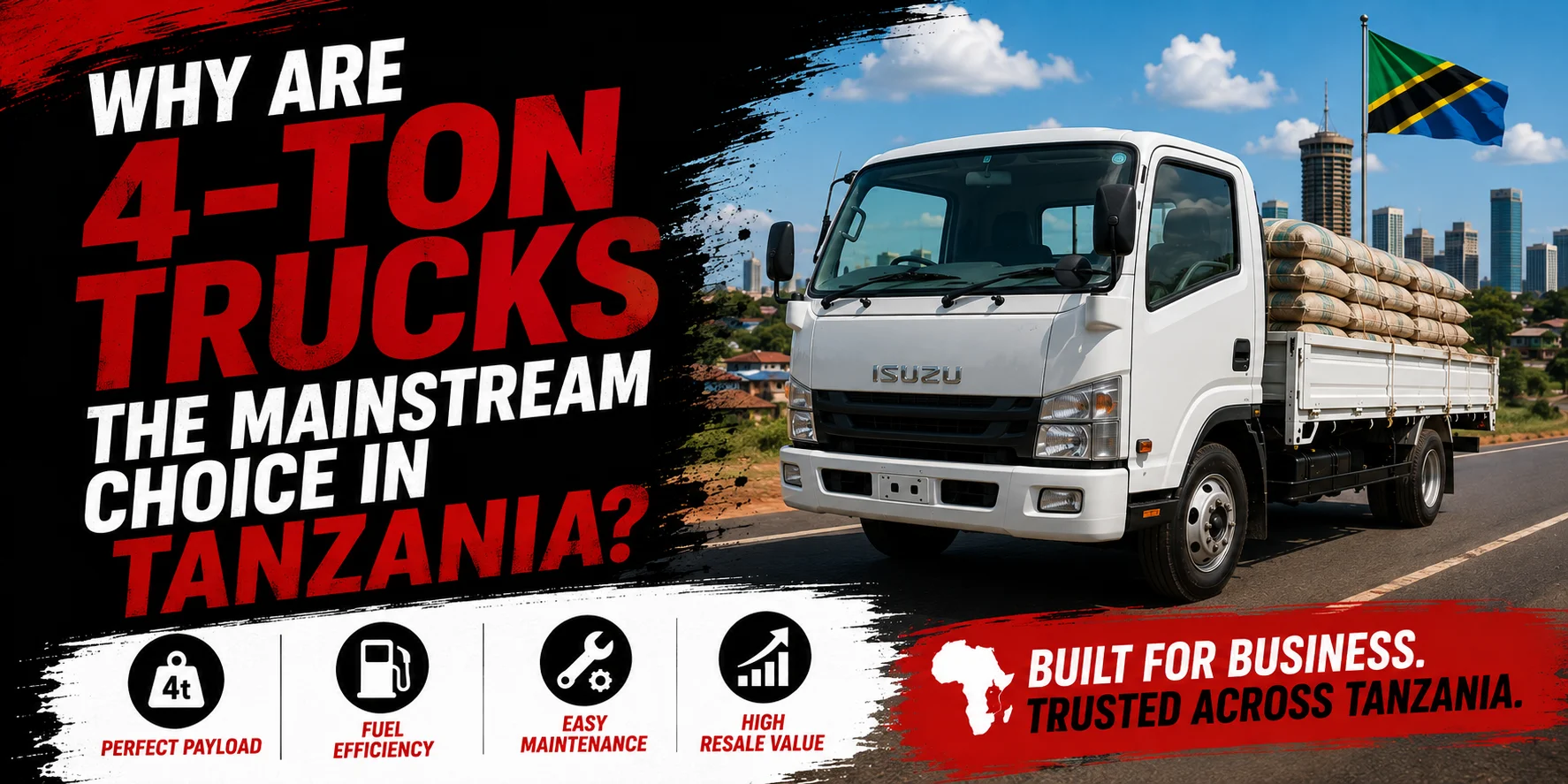
Walk through any transport yard in Tanzania and you will notice the same thing. Small pickups and large trailers exist, but the trucks doing most of the daily work are 4-ton class vehicles. This is not a coincidence. It is the result of payload needs, road conditions, and repair costs all pointing in the same direction.
What Is a 4-Ton Truck?
In Japan, trucks are usually described by their payload class.
The 4-ton class refers to medium-duty trucks such as:
- Mitsubishi Fuso Fighter
- Isuzu Forward
- Hino Ranger
- UD Condor
These trucks sit between light-duty models like the Mitsubishi Canter and heavy-duty tractor units.
Reason 1: The Best Balance Between Payload and Cost
A light-duty truck is cheaper to buy and run, but it often requires more trips to move the same load.
A heavy-duty truck can carry much more, but it also brings:
- Higher purchase price
- Higher fuel consumption
- Higher import duties and taxes
- More expensive tyres and parts
The 4-ton class sits in the middle, which is why many operators consider it the most practical size for everyday business.
Reason 2: Suitable for Tanzanian Road Conditions
Many delivery routes in Tanzania include unpaved sections, narrow village roads, and uneven surfaces.
A 4-ton truck offers:
- Enough ground clearance for rough roads
- A body size that can still pass through narrow streets
- A strong chassis that tolerates overloading better than light-duty models
Larger trucks may struggle to reach the same destinations, especially during the rainy season.
Reason 3: Parts and Mechanics Are Everywhere
Because so many 4-ton trucks are already operating in the country, local workshops know them well.
This means:
- Spare parts are widely available
- Mechanics are familiar with common repairs
- Downtime is usually shorter
Popular models such as the Fighter and Forward are often fitted with older mechanical diesel engines, which local mechanics can repair without specialised diagnostic equipment.
Reason 4: Flexible Body Options
The 4-ton chassis can be used for many types of business.
Common configurations include:
- Flatbed for general cargo
- High deck for bulky loads
- Tipper for construction materials
- Tanker or box body built locally
Many buyers import a flatbed truck and build the body they need after arrival, which is one reason wing body trucks are less common.
Reason 5: Easier to Resell
Demand for 4-ton trucks stays strong in the local second-hand market.
A truck that many people want is easier to sell later, which protects the value of the original investment.
What to Check Before Buying
Even within the 4-ton class, condition varies widely.
Before purchasing, confirm:
- Chassis condition and rust
- Oil leaks around the engine and transmission
- Engine type and parts availability
- Overall height and dimensions for shipping
See our guide on common mistakes when buying used trucks for Tanzania for more detail.
Conclusion
The 4-ton class is popular in Tanzania because it fits the way business is actually done there.
It carries enough cargo to be profitable, reaches almost any destination, and can be repaired locally at reasonable cost.
For most operators, that balance matters more than maximum payload alone.