


Why Turbo Engines Are Popular for High-Altitude Routes
Power Loss, Boost Pressure, and the Best Models for Highland Areas
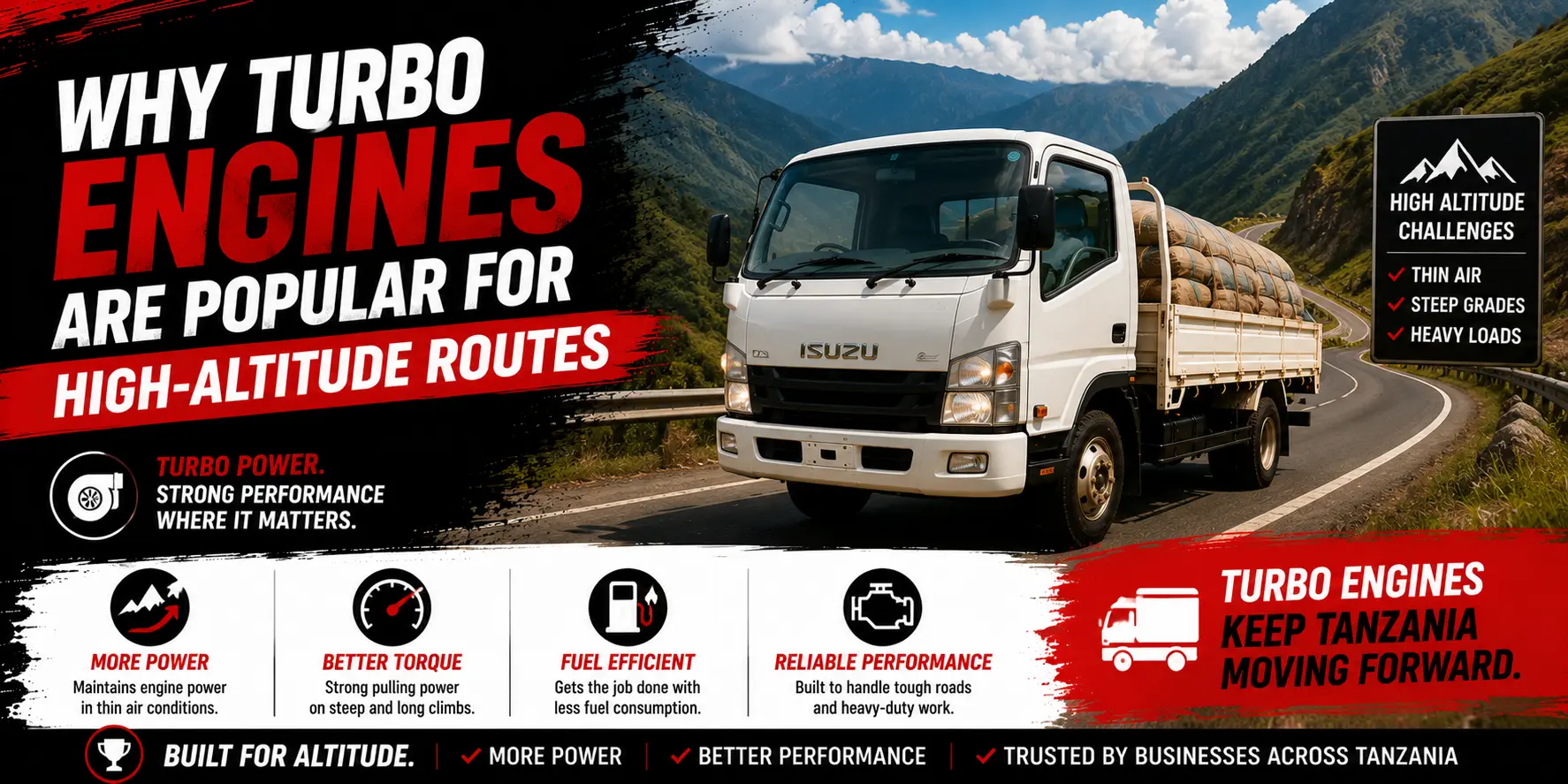
At high altitude, the air is thinner, and engines that rely on natural air intake lose power. This is a serious issue for trucks operating on highland routes and mountain roads across Africa. Turbocharged engines solve this problem, which is why they are increasingly preferred by buyers working at elevation. This article explains why altitude affects engine performance and how a turbocharger compensates for it.
Why Altitude Affects Engine Power
An engine produces power by burning fuel with oxygen from the air.
As altitude increases, air pressure drops and the air becomes less dense, so each intake stroke draws in less oxygen.
A naturally aspirated engine has no way to compensate for this, so its power output falls as elevation rises.
On steep highland roads, this power loss is felt directly through weaker acceleration, slower climbing speed, and heavier fuel consumption relative to the work done.
How a Turbocharger Compensates
A turbocharger uses exhaust gas to spin a turbine, which compresses the intake air before it enters the engine.
This compression restores much of the air density lost to altitude, so the engine keeps receiving close to a full charge of oxygen even when the surrounding air is thin.
As a result, a turbocharged truck loses far less power at elevation than a naturally aspirated one, and keeps a more consistent driving feel across changes in altitude.
Where This Matters Most in Africa
Elevation is a real factor on many African transport routes, including:
- The Ethiopian highlands
- Highland areas of Kenya and Rwanda
- The Zambian plateau
- Mountain roads in Lesotho and parts of Uganda
On these routes, trucks regularly climb long grades at altitude, which is exactly the condition where a naturally aspirated engine loses the most power.
Popular Turbo Diesel Models
Among used Japanese trucks, buyers working at altitude commonly look for turbo diesel engines such as:
These engines are fitted in popular models like the Mitsubishi Fuso Fighter and Hino Ranger, both of which are widely available on the used market.
What Buyers Should Check
A turbocharger is a mechanical part that can wear out, so it is worth confirming before purchase:
- No unusual smoke under acceleration, which can indicate turbo or seal wear
- Boost hoses and clamps are intact and not cracked
- The intercooler is free of leaks and heavy oil residue
- The turbo shaft has no excessive play when checked by a mechanic
A well-maintained turbo diesel is a reliable choice, but a neglected one can be an expensive repair, so inspection matters as much as the engine type itself.
Choosing the Right Engine for Your Route
For flat, low-altitude routes, a naturally aspirated engine can still be a simple and reliable option.
For highland routes with long climbs, a turbocharged engine keeps more of its power and copes far better with elevation.
WeCarJapan stocks a wide range of turbo diesel trucks suited to highland operating conditions.
Please check our stock to find a model that matches the altitude and terrain of your route.