




Why Demand for Refrigerated Trucks Is Growing in Tanzania
Fish, Dairy, Fruit, and the Cold Chain from Dar es Salaam
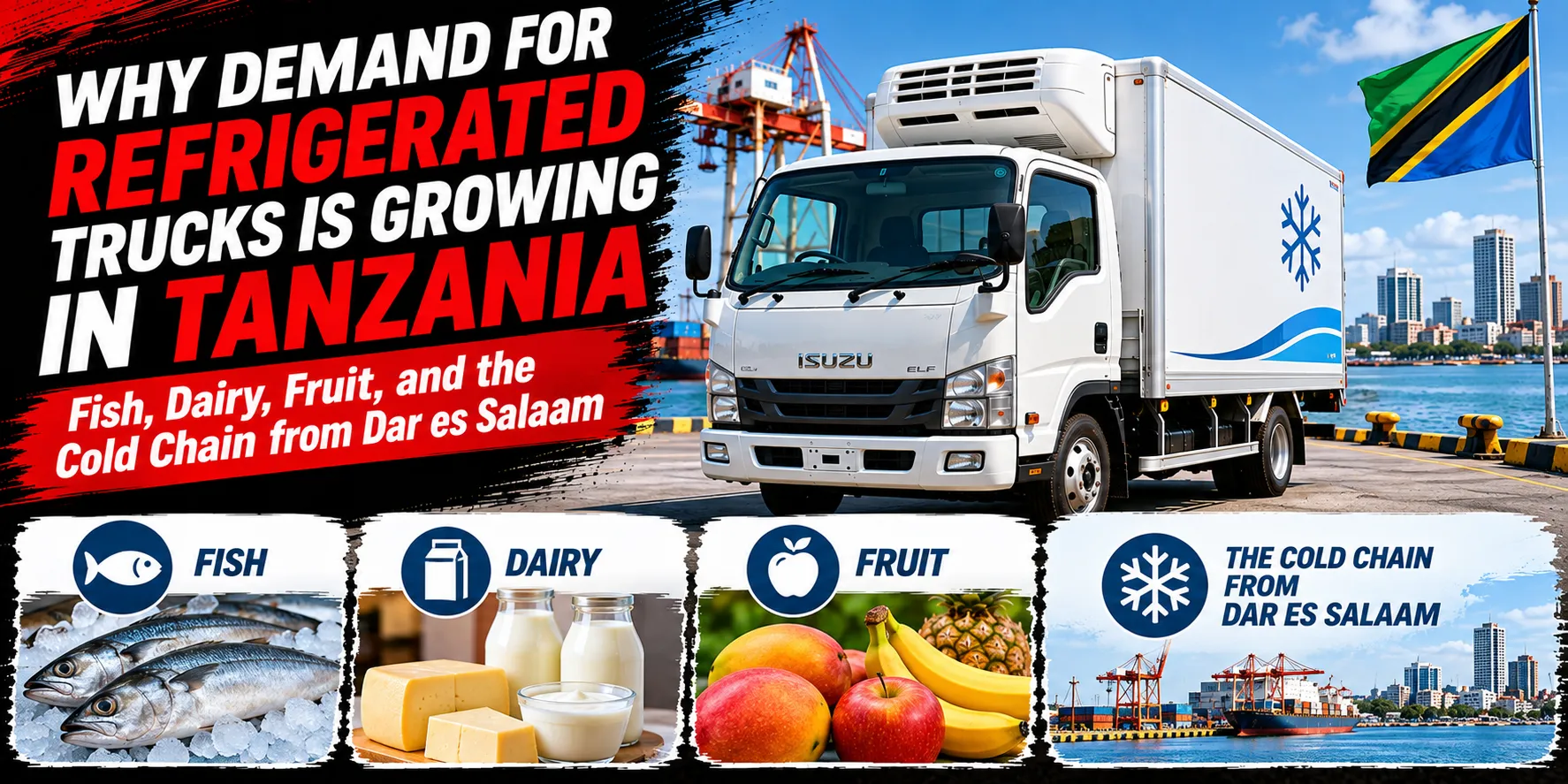
For many years, most trucks imported to Tanzania were flatbeds and dump trucks. Today, more buyers are asking for refrigerated and freezer trucks. This article explains why demand for cold transport is growing, and what to check before importing a used refrigerated truck from Japan.
Fresh Food Has to Travel Further
Tanzania's cities are growing quickly. Dar es Salaam, Arusha, Mwanza, and Dodoma all need a steady supply of fish, meat, milk, fruit, and vegetables, often from farms and fishing areas hundreds of kilometres away.
In a hot climate, these products spoil within hours without cooling. A refrigerated truck lets a business carry fresh food over long distances and still sell it at full price.
Main Sources of Demand
- Fish: fish from Lake Victoria around Mwanza and from the Indian Ocean coast is carried to processing plants, markets, and other cities.
- Meat and poultry: slaughterhouses and poultry farms deliver chilled and frozen products to butchers, hotels, and restaurants.
- Dairy: milk, yoghurt, and other dairy products must stay cold from the processor to the shop.
- Fruit and vegetables: horticulture in the northern and southern highlands, including avocados, flowers, and vegetables for export, needs cooling on the way to the airport or port.
- Supermarkets and restaurants: modern retail and the hotel and tourism industry expect regular cold deliveries.
- Ice cream, drinks, and medicine: distributors of frozen foods and pharmaceuticals also depend on temperature-controlled transport.
Why Small Refrigerated Trucks Sell Well
Much of this demand is for city and regional delivery, not long-haul transport. For this work, 2-ton to 4-ton class refrigerated trucks are the most practical choice. They can enter narrow city streets and markets, and their running costs are low.
Japanese models such as the Mitsubishi Canter, ISUZU Elf, and Hino Dutro are popular because their engines and chassis are already well known to Tanzanian mechanics, and spare parts are easy to find. For heavier loads over longer routes, 4-ton class trucks such as the Mitsubishi Fighter and ISUZU Forward are also used.
Chilled or Frozen? Choose the Right Body
Japanese refrigerated trucks are generally built for one of two temperature ranges:
- Chilled (medium temperature): around 0°C to +10°C, for milk, fruit, vegetables, and fresh meat.
- Frozen (low temperature): down to around -25°C to -30°C, for frozen fish, frozen meat, and ice cream.
A freezer truck can also carry chilled goods, but a chilled truck cannot keep goods frozen. Decide what you will carry before choosing a truck.
Bodies come as box vans with rear doors, or as freezer wing bodies whose sides open for faster loading. Box vans are simpler and more common.
What to Check Before Importing a Used Refrigerated Truck
A refrigerated truck is two machines in one: the truck and the cooling unit. Check both before you buy.
- Cooling performance: ask for a cooling test, or a photo or video of the temperature display after the unit has been running.
- Cooling unit maker: Japanese trucks use units from makers such as Denso, Topre, Mitsubishi Heavy Industries, and Thermo King. Ask your local mechanic which makers they can service.
- Insulated body: check the walls, floor, and door seals for damage. Cold air escaping through broken seals makes the unit work harder and uses more fuel.
- How the unit is powered: on many small Japanese trucks, the compressor is driven by the truck's engine, so the engine must run to keep the cargo cold.
- Standby electric plug: some trucks can be cooled from mains power while parked. The plug and voltage are designed for Japan, so check with a local electrician before relying on it.
For general points on checking a used truck, see Common Mistakes When Buying Used Trucks for Tanzania.
A Refrigerated Truck Can Earn More
Cold transport is a specialised service, so it can command higher rates than general cargo. Many customers, such as supermarkets and processors, need deliveries every day or every week, which gives the owner stable work.
On the other hand, a refrigerated truck costs more to buy and to run than a flatbed. Plan your routes and customers first, and choose a truck size that you can keep busy.
Conclusion
Demand for refrigerated trucks in Tanzania is growing with the cities, modern retail, and food exports. Small Japanese refrigerated trucks fit this market well because they are easy to drive in town and easy to repair locally.
Before you buy, decide between chilled and frozen, and check the cooling unit as carefully as the truck itself. Please check our refrigerated truck stock or contact us for a C&F quotation to Dar es Salaam.